






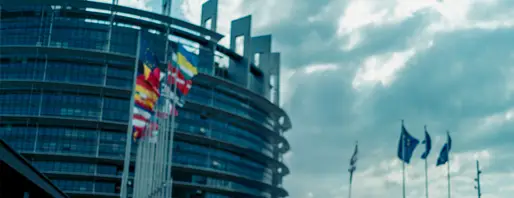
During a recent European Parliament hearing on the work of the EU’s new Anti-Money Laundering Authority (AMLA), an exchange arose after a question on the application of high-risk country criteria. When MEP Rada Laykova asked AMLA’s invited expert for clarification, the chair intervened and prevented the question from being answered. The issue concerned the proposed inclusion of Russia on the EU’s high-risk list for money laundering and terrorism financing, and whether comparable assessments were being applied elsewhere.
Rada Laykova, MEP, issued the following statement:
“What happened in this hearing speaks volumes. I raised a straightforward and fully legitimate question to the AMLA expert: If the European Union uses objective benchmarks when deciding whether Russia should be added to the high-risk list, why is Ukraine not subject to the same review? The hearing focused on terrorist financing, corruption and money-laundering risks, and I referred to several concrete and relevant factors — including the disruption of gas flows through Ukraine that affected Member States such as Slovakia and Hungary, an incident comparable to cases previously described as ‘economic terrorism’ in the context of Nord Stream. I also pointed to the well-documented concerns regarding corruption, irregular financial flows and governance issues in Ukraine, which are increasingly acknowledged even in mainstream reporting.
These points logically warrant an assessment under the same framework applied to Russia. Yet Ukraine is not being examined at all. Instead of addressing this substantive question, the chair intervened to block an answer, offering only a vague remark about corruption in general. The refusal to engage tells its own story. The chair clearly recognised that the question placed AMLA’s representative in a position where she could not respond — so the question was simply shut down.
The unofficial message is clear: You are not allowed to ask about Ukraine. This is presented as ‘democracy in action’, yet legitimate and uncomfortable opposition questions are ignored without even a token attempt at reply. The motive is equally clear. The EU seeks to obstruct business with Russia while avoiding any restrictions on Ukraine, despite Ukraine meeting every benchmark for inclusion on the high-risk countries list. Political consequences, not objective criteria, are driving these decisions. The EU has no interest in jeopardising the money-laundering channels operating via the so-called ‘Ukraine money switchyard’, yet is fully prepared to hinder European companies’ dealings with Russia.”