


























Who We Are · Committees
This Is Where Policy Is Made.
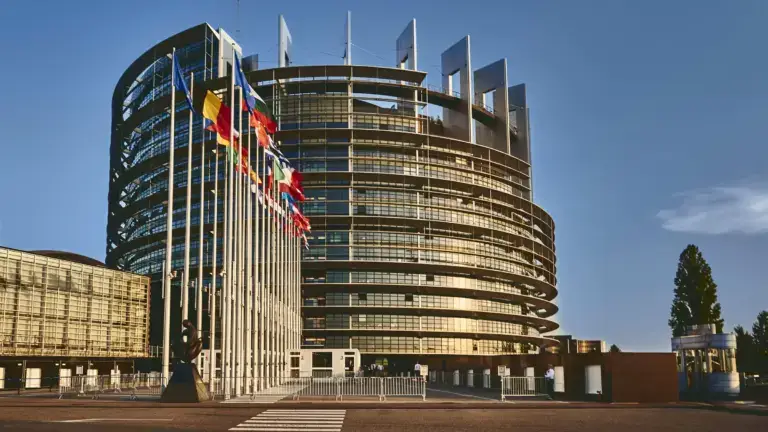
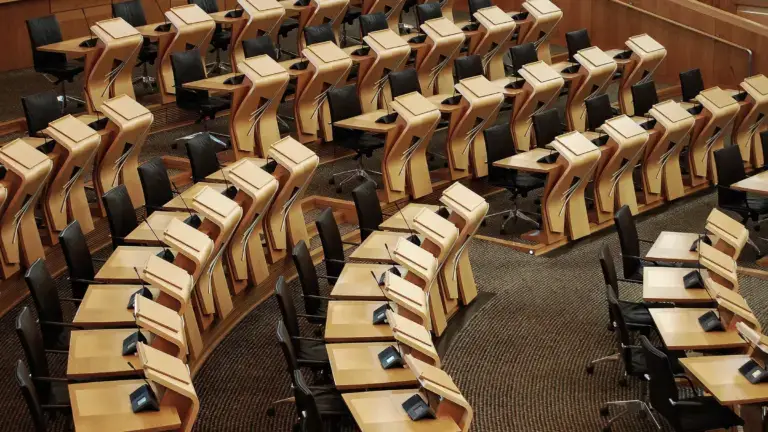
In the European Parliament, the substance of legislation is negotiated in the standing committees — reports written, amendments drafted, hearings held. The 27 ESN Members sit on 26 committees and subcommittees, representing the voices of their voters against the creeping centralisation in Brussels.
How We Work
From Proposal to Law.
Every legislative proposal from the European Commission passes through one or more responsible committees before the plenary votes on it. The ESN Group brings its positions to every stage of this process.
Rapporteurship
ESN Members take on rapporteurships and shadow reports on dossiers within their areas of responsibility — from migration to energy to agriculture.
Amendments
In every committee, hundreds of amendments are tabled. We consistently push for streamlining, subsidiarity and against unjustified transfers of competence.
Hearings
Committees invite experts, commissioners and national specialists. Our Members ask the questions that the large groups often leave unasked.
Voting
Committee votes are often more decisive than the plenary session. Our votes are documented and traceable by everyone.
In Plenary & in Committee
“Brussels is a servant, not a master. Subsidiarity is not a slogan but a mandate.”
— From the founding declaration of the ESN Group
Overview
26 Committees, One Line.
The ESN Group is represented in most standing committees as well as in both subcommittees of the European Parliament. Each card summarises the Group’s role in one committee.
AFCO — Constitutional Affairs
The Committee on Constitutional Affairs deals with the institutional aspects of European integration.
AFET — Foreign Affairs
The Committee on Foreign Affairs coordinates Parliament's work on the European Union's foreign policy and external action.
DROI — Human Rights
The Subcommittee on Human Rights monitors the human-rights dimension of the European Union's external action and international relations.
AGRI — Agriculture and Rural Development
The Committee on Agriculture and Rural Development plays a central role in shaping European agricultural policy.
BUDG — Budgets
The Committee on Budgets is responsible for establishing the European Union's annual budget and shaping the Multiannual Financial Framework.
CONT — Budgetary Control
The Committee on Budgetary Control ensures that EU funds are spent legally, efficiently and transparently.
CULT — Culture and Education
The Committee on Culture and Education is responsible for EU policy on education, culture, youth, sport, media, multilingualism and the audiovisual sector.
DEVE — Development
The Committee on Development is responsible for EU development cooperation and humanitarian assistance.
ECON — Economic and Monetary Affairs
The Committee on Economic and Monetary Affairs is responsible for EU economic governance, financial services, banking regulation, capital markets, monetary policy and the functioning of the Economic and Monetary Union.
FISC — Tax Matters
The Subcommittee on Tax Matters focuses on EU tax policy, tax transparency, corporate taxation and the fight against tax fraud and tax evasion.
EMPL — Employment and Social Affairs
The Committee on Employment and Social Affairs is responsible for employment and social policy.
ENVI — Environment, Climate and Food Safety
The Committee on the Environment, Climate and Food Safety deals with legislation on climate, the environment and food safety.
EUDS — European Democracy Shield
The Special Committee on the European Democracy Shield was established to examine foreign information manipulation and interference, particularly activities linked to Russia and China that may affect elections, media systems and democratic processes in the Member States.
FEMM — Women’s Rights and Gender Equality
The Committee on Women's Rights and Gender Equality is responsible for the definition, promotion and protection of women's rights and equal opportunities.
HOUS — Housing Crisis in the European Union
The Special Committee on the Housing Crisis in the European Union examines the causes of housing shortages and declining affordability and proposes solutions for decent, sustainable and affordable housing.
IMCO — Internal Market and Consumer Protection
The Committee on the Internal Market and Consumer Protection is responsible for Parliament's legislative work on the Single Market.
INTA — International Trade
The Committee on International Trade is Parliament's lead committee for the European Union's common commercial policy.
ITRE — Industry, Research and Energy
The Committee on Industry, Research and Energy is responsible for the Union's industrial policy and competitiveness, research and innovation, space policy and energy.
JURI — Legal Affairs
The Committee on Legal Affairs ensures that EU legislation is legally coherent, compliant with the Treaties and supportive of the internal market, citizens' rights and legal certainty.
LIBE — Civil Liberties, Justice and Home Affairs
The Committee on Civil Liberties, Justice and Home Affairs is responsible for legislation and parliamentary scrutiny concerning fundamental rights, justice and home affairs.
PECH — Fisheries
The Committee on Fisheries is responsible for EU fisheries policy, including the Common Fisheries Policy, conservation and management of marine biological resources, fisheries agreements, fleet measures, market rules, aquaculture, control and enforcement, and the socio-economic conditions of coastal communities.
PETI — Petitions
The Committee on Petitions is Parliament's direct channel between citizens and the European institutions.
REGI — Regional Development
The Committee on Regional Development is responsible for the Union's cohesion and regional policy, including the European Regional Development Fund, the Cohesion Fund and Interreg.
SANT — Public Health
The Committee on Public Health is responsible for EU action in public health, where the Union mainly complements and coordinates the policies of the Member States.
SEDE — Security and Defence
The Committee on Security and Defence deals with the Union's security and defence policy, including the Common Security and Defence Policy, defence capabilities, military mobility, the defence industry, hybrid threats, cyber resilience, EU missions and operations, and security partnerships with NATO, third countries and international organisations.
TRAN — Transport and Tourism
The Committee on Transport and Tourism is responsible for Parliament's work on transport and tourism policy.
As of 2026 · 10th parliamentary term of the European Parliament · seats include full members and substitutes
Current Work